Introduction: Top Desert Destinations in India
When people talk about travel in India, the conversation usually starts with mountains, beaches or hill stations. Yet, some of the most powerful and unforgettable journeys happen far away from greenery in the heart of the desert. Desert destinations in India are not empty stretches of sand; they are living landscapes shaped by history, culture, survival and stories passed down through generations.
From golden dunes glowing at sunset to villages where life moves at its own calm rhythm, deserts offer a sense of peace that modern travel often lacks. Among all regions, Rajasthan dominates the conversation when it comes to desert tourism. Rajasthan desert travel is not only about sightseeing; it is about feeling the silence, understanding traditions and experiencing hospitality that comes straight from the heart.
This in-depth Rajasthan trip guide is written to genuinely help travelers. You will learn about the most famous deserts in India, explore the iconic Thar Desert Rajasthan, understand safari experiences, desert camping options, cultural life and practical travel advice all explained naturally, without keyword stuffing or robotic tone.
Desert Destinations in India – An Overview
India is one of the few countries in the world that has both hot and cold deserts. These regions are completely different from each other, yet equally fascinating. Desert places in India are shaped by climate, altitude and centuries of human adaptation.
Hot deserts, mainly in western India, are known for sand dunes, camel trails and vibrant folk culture. Cold deserts, found in the Himalayan region, are defined by rocky terrain, thin air and spiritual calm. Together, they form some of the best desert destinations to visit in India.
Each desert destination offers a unique experience from cultural immersion to adventure travel making India desert tourism far more diverse than most travelers expect.
Thar Desert (Rajasthan)
The Thar Desert is the most iconic and widely visited desert region in India. Spread across western Rajasthan, this vast desert is not just about sand dunes—it represents centuries of history, culture and human resilience. Life in the Thar has evolved around limited water resources, harsh summers and strong community bonds, which is clearly reflected in local traditions and architecture.
Traveling through the Thar Desert feels like stepping into a different rhythm of life. Ancient forts rise dramatically from the desert floor, villages remain deeply rooted in tradition and camel caravans still move across dunes as they have for generations. The region is also known for unforgettable sunset views, folk music evenings and authentic desert hospitality, making it the heart of Rajasthan’s desert tourism.
Cold Desert of Ladakh
The Ladakh region is often called a cold desert due to its high altitude, dry climate and extreme temperatures. Unlike sandy deserts, Ladakh is defined by barren mountains, rocky valleys and vast open landscapes that feel both powerful and peaceful. Rainfall here is minimal, which gives the land its desert-like nature despite being surrounded by snow-capped peaks.
This region offers a completely different desert experience compared to Rajasthan. Travelers come to Ladakh for spiritual calm, adventure activities and raw natural beauty. Buddhist monasteries, remote villages and crystal-clear skies add depth to the journey, making Ladakh one of the most unique desert destinations in India for slow and meaningful travel.
Rann of Kutch (Gujarat)
The Rann of Kutch is one of the largest salt deserts in the world and stands out for its striking white landscape. For most of the year, this region remains dry and cracked, but during winter, it transforms into a cultural and visual spectacle. The endless white salt flats create an almost surreal environment, especially under moonlight.
What makes the Rann of Kutch special is its strong connection to local art and culture. Traditional handicrafts, embroidery, folk music and dance are deeply woven into daily life. Seasonal festivals celebrate this heritage, allowing travelers to experience desert life beyond landscapes and truly connect with the people of the region.
Spiti Valley Cold Desert (Himachal Pradesh)
The Spiti Valley is a remote high-altitude desert known for its isolation, simplicity and dramatic terrain. Located in Himachal Pradesh, Spiti remains cut off for a significant part of the year due to heavy snowfall, which has helped preserve its raw and untouched character.
Life in Spiti is shaped by extreme weather and limited resources, yet the region radiates calm and spiritual depth. Ancient monasteries perched on cliffs, small villages surrounded by barren land and quiet mountain roads define the Spiti experience. This cold desert is ideal for travelers seeking solitude, reflection and a deeper connection with nature.
Lahaul–Spiti Cold Desert
The Lahaul and Spiti region offers a fascinating contrast between snow-covered peaks and dry desert valleys. While Lahaul appears greener and more open during summer, Spiti remains stark and barren, together forming a unique cold desert landscape within Himachal Pradesh.
This region is perfect for travelers who enjoy offbeat destinations and scenic road journeys. The terrain is dramatic, the villages are deeply traditional and the pace of life is slow and grounded. Lahaul–Spiti showcases how desert environments can exist alongside glaciers and mountains, making it one of the most visually and culturally rich cold desert regions in India.
Thar Desert Rajasthan – The Most Popular Desert in India
Among all desert places in India, the Thar Desert holds a special place. It is deeply woven into Rajasthan’s history, folklore and daily life. For centuries, people here have adapted to extreme heat, limited water and harsh conditions and yet created a culture full of color, music and celebration.
Traveling through the Thar Desert Rajasthan is not just about landscapes. It is about listening to folk songs under open skies, watching camels walk slowly across dunes and feeling time slow down. This is why Rajasthan desert travel feels deeply personal to many visitors.
Places to visit in Thar Desert Rajasthan include historic cities, peaceful villages and vast dune areas where silence becomes an experience in itself.
Best Desert Places in Rajasthan
Jaisalmer – The Golden City
Jaisalmer is the heart of desert tourism in Rajasthan. Often called the Golden City, Jaisalmer rises from the Thar Desert like a mirage, built almost entirely from golden sandstone.
Walking through its narrow streets feels like stepping into history. The fort, havelis and temples tell stories of traders, warriors and desert life that once thrived along ancient trade routes.
Jaisalmer is also the center of Rajasthan desert safari experience, making it one of the best desert places in Rajasthan.
Key experiences include:
- Exploring Jaisalmer Fort
- Visiting Patwon Ki Haveli
- Enjoying camel safari in Thar Desert
- Watching magical sunset views in Thar Desert
- Staying in desert camps near Sam Sand Dunes
Bikaner – Cultural Desert Experience
Bikaner offers a deeply rooted cultural experience that reflects the traditional desert lifestyle of Rajasthan. Unlike more commercial desert destinations, Bikaner retains a strong local identity where everyday life, customs and architecture remain largely untouched by mass tourism. The city sits on the edge of the Thar Desert and has historically played an important role in desert trade and defense.
What makes Bikaner special is its rich blend of history and living culture. Grand forts, old havelis and narrow streets tell stories of royal patronage and desert resilience. Local markets showcase traditional sweets, crafts and textiles, while camel breeding farms and desert festivals give visitors a closer look at how desert communities have survived and thrived for generations. For travelers seeking cultural experiences in the Rajasthan desert, Bikaner offers authenticity and depth rather than just sightseeing.
Jodhpur & Osian – Where History Meets the Desert
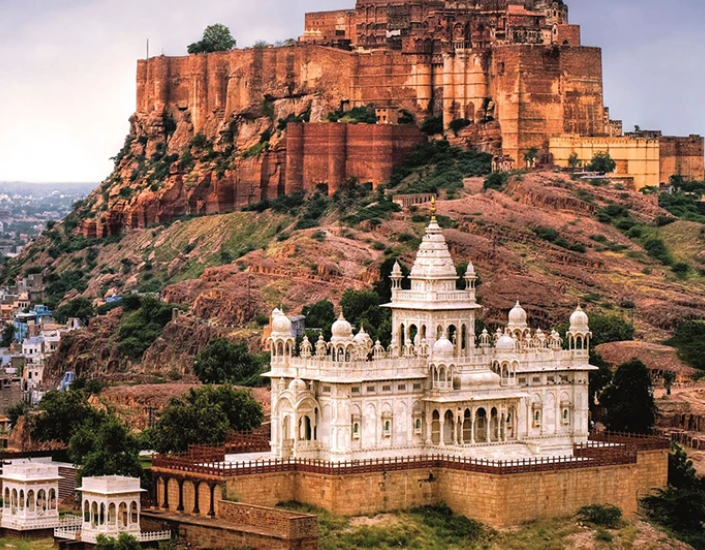
Jodhpur and Osian together create a well-balanced desert travel experience that combines heritage, architecture and peaceful desert landscapes. Jodhpur, often called the Blue City, is dominated by a massive hilltop fort and surrounded by houses painted in calming shades of blue, creating a striking contrast against the desert backdrop.
Osian, located on the outskirts of Jodhpur, introduces travelers to a quieter side of the desert. Known for its ancient temples and soft sand dunes, Osian offers a more relaxed desert environment ideal for short safaris and cultural stays. Together, Jodhpur and Osian allow visitors to experience royal history in the city and calm desert life just a short distance away, making this combination ideal for travelers who want both structure and serenity in their Rajasthan desert journey.
Rajasthan Desert Safari Experience
A trip to Rajasthan feels incomplete without experiencing the desert through a safari. Rajasthan desert safari experience allows travelers to explore the dunes while learning about desert ecology and village life.
Camel Safari in Thar Desert
The camel safari in Thar Desert is one of the most traditional ways to experience the desert. Moving slowly across dunes on camelback gives travelers time to observe details shifting sand patterns, distant villages and endless horizons.
This experience often includes village visits, local meals and quiet sunset moments that feel deeply grounding.
Jeep Safari & Adventure Activities
Jeep safaris are ideal for travelers who enjoy speed and adventure. These safaris cover larger desert areas and offer thrilling rides across high dunes. They are popular among younger travelers and photography enthusiasts.
Desert Camping in Rajasthan
Staying overnight in the desert transforms the journey completely. Desert camping in Rajasthan allows travelers to experience silence, star-filled skies and cultural evenings in a natural setting.
Luxury Desert Camps Rajasthan
Luxury desert camps Rajasthan combine comfort with tradition. These camps are beautifully designed and provide high-end facilities while maintaining a strong connection to desert culture.
Guests can enjoy cultural performances, traditional food and peaceful nights surrounded by dunes.
Budget Desert Camps
Budget camps focus on authenticity rather than luxury. They are ideal for backpackers and travelers who want a simple yet meaningful desert experience.
Cultural Experiences in Rajasthan Desert
The desert culture of Rajasthan is rich, expressive and deeply emotional. Folk music, dance forms like Kalbelia, colorful attire and storytelling traditions have been preserved for generations.
Visitors often realize that cultural interaction not sightseeing becomes the most memorable part of their journey.
Best Time to Visit Rajasthan Desert
The best time to visit Rajasthan desert regions is from October to March. During this period, the weather is pleasant, making outdoor activities comfortable. Many festivals also take place during winter, adding cultural depth to the trip.
Rajasthan Desert Tour Packages & Travel Guide
Well-planned Rajasthan desert tour packages make travel stress-free. These packages often include transport, accommodation, safaris and guided sightseeing.
A reliable Rajasthan trip guide ensures travelers understand routes, weather and cultural etiquette. Experienced operators like Devika Tours focus on balanced experiences that feel comfortable yet authentic.
Conclusion
Deserts are not empty lands they are spaces filled with stories, resilience and quiet beauty. From the iconic Thar Desert Rajasthan to lesser-known cold deserts, desert destinations in India offer experiences that stay with travelers long after the journey ends.
Whether you are drawn to desert camps in Rajasthan, camel safaris, cultural traditions or peaceful sunsets, desert travel offers something deeply human a chance to slow down and truly connect.
FAQ's
Also Read This Blog:
- Delhi to Manali Distance by Road, Time, Route & Tips
- Jaipur to Jodhpur Road Trip Guide: Distance & Routes Info
- Jaipur to Mount Abu by Road: Distance, Time & Useful Info Guide
- Jaipur to Udaipur Road Trip – Route Distance, Best Stops & Travel Tips
- Jaipur to Jaisalmer Road Trip: Distance, Time & Useful Info Guide
Contact Us